
Success in e-commerce is often celebrated as a sign of strength. However, sales growth without operational reinforcement creates a predictable problem.
Revenue scales faster than systems.
This is the e-commerce growth trap.
As marketing improves and order volume increases, backend processes are tested. What once worked at 30 orders per day may fail at 500. Small inefficiencies begin to compound, quietly reducing margin and increasing operational risk.
Sales Scale Faster Than Execution Capacity
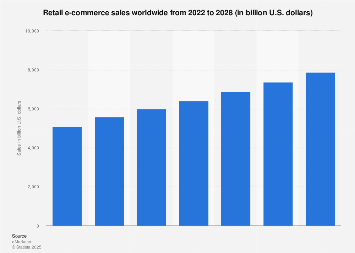
Global e-commerce continues to grow steadily. According to Statista (2024), global retail ecommerce sales are projected to exceed $6 trillion and continue expanding in the coming years.
While marketing platforms allow brands to scale demand quickly, backend workflows do not automatically scale at the same rate (Statista, 2024).
Without structured operational ownership, growth introduces:
- Slower refund processing
- Inventory mismatches
- Listing inconsistencies
- Delayed customer responses
- Increased administrative burden
Revenue increases. Friction increases with it.
Small Inefficiencies Multiply at Scale
Operational inefficiencies that seem minor at low volume can become costly at scale.
| Inefficiency | At 25 Orders/Day | At 1,000 Orders/Day |
| 3-minute manual refund | 75 minutes daily | 50 hours weekly |
| 1% listing error | manageable | measurable revenue loss |
| 2% delayed support responses | minor | churn risk |
As volume grows, the cost of manual coordination increases exponentially.
According to the National Retail Federation (2023), retail return rates averaged 14.5 percent of total sales in 2023. Each return requires operational processing, including communication, refunds, and inventory updates. As order volume grows, this workload scales proportionally.

Learn Something New ➜
Many ecommerce businesses experience rapid sales growth, but without operational readiness, this often leads to declining profitability and increasing complexity.
As revenue increases, so do costs—inventory, fulfillment, customer support, and marketing—often creating cash flow pressure instead of real growth. :contentReference[oaicite:0]{index=0}
When Growth Becomes a Liability
Scaling too quickly can expose weaknesses in backend systems such as order handling, inventory management, and customer communication—leading to delays, errors, and poor customer experience.
Businesses address these challenges by strengthening operations through roles like ecommerce customer support representatives and Shopify admin support , ensuring smoother workflows and consistent service delivery.
Sustainable growth in 2026 depends not just on increasing sales, but on building systems that can support and maintain that growth efficiently.
Ready to Stabilize and Scale Your Ecommerce Business?
Customer Expectations Rise With Growth
Customer tolerance for operational errors is low. Salesforce (2023) reports that 88 percent of customers say the experience a company provides is as important as its products or services.
When backend execution fails to match front-end marketing performance, customers feel the gap. Slow refunds, inconsistent order updates, and inventory cancellations directly impact retention (Salesforce, 2023).
Operational instability does not reduce revenue immediately. It weakens customer trust gradually.
Hiring Alone Does Not Close the Gap
When growth strain appears, many e-commerce brands attempt to hire quickly. However, hiring introduces its own delay.
According to the Society for Human Resource Management (SHRM), the average time to fill a position in the United States is approximately 44 days. During that time, operational pressure continues to build (SHRM, 2023).
Adding headcount without defined operational ownership can increase coordination complexity rather than reduce it.
The solution is not reactive hiring. It is a structured execution depth.
Read more:
- Real Estate Virtual Assistant Services for Agents

- Virtual Assistants Are No Longer Just for Small Businesses

- End-of-Year Business Reset: What Smart Companies Outsource Before January

- How Much Does It Cost to Hire a Real Estate Transaction Coordinator VA? Complete Pricing Guide

- 12 Must-Have Real Estate Transaction Coordinator VA Skills to Look For (US Guide)

References
National Retail Federation. (2023). 2023 consumer returns in the retail industry.
Salesforce. (2023). State of the connected customer report.
Society for Human Resource Management. (2023). Average time to fill positions.
Statista. (2024). Retail e-commerce sales worldwide from 2014 to 2027.